Why Google and OpenAI are Obsessed with AI Ethics: The Hidden Truth of the ChatGPT Era
We gently explain why tech giants like Google and OpenAI focus so heavily on ethical issues, uncovering the importance and hidden controversies of AI research ethics in today's rapidly advancing tech world.
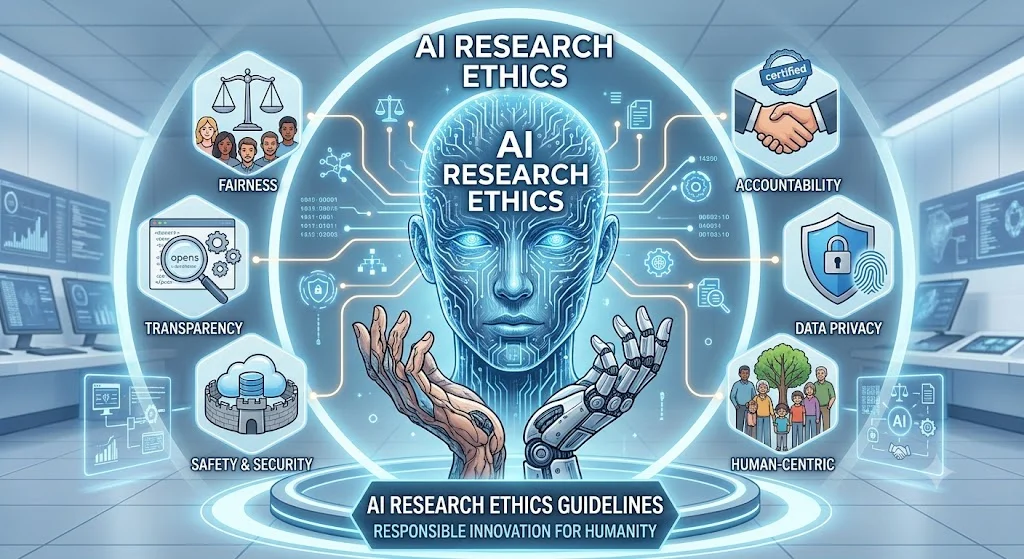
[ This image was created using generative AI ]
Why Google and OpenAI are Obsessed with AI Ethics: The Hidden Truth of the ChatGPT Era
Hello everyone! I am your friendly tech storyteller, here to break down complex IT technologies and AI trends into easy, step-by-step explanations tailored to your perspective. Today, I want to dive into a topic we hear about constantly in the news these days: the fascinating yet deep world of artificial intelligence ethics.
Why I Chose This Topic and Why We Need It Now
Over the past few years, various generative AIs, starting with ChatGPT, have been rapidly transforming our daily lives. Students use them for assignments, professionals draft business proposals with their help, and creators find fresh inspiration. It is becoming harder to find an area untouched by AI, from our smartphones and home appliances to our workplaces. While it is an incredibly convenient and wondrous technology, do you ever feel a vague sense of unease lingering in the back of your mind?
The reason I chose this topic today is to uncover the reality behind that unease and to properly understand the direction in which this technology is heading. In an era where AI technology evolves by the day, examining the ethical issues hidden behind its glamorous facade is no longer optional; it is essential. Only by understanding how the technology we use every day affects our thoughts, our society, and our personal data can we become masters of the technology who use it properly, rather than being dragged along by it. So, let's explore why massive companies like Google and OpenAI are emphasizing ethics so strongly.
Google and OpenAI: Why Do They Champion Ethics?
Google and OpenAI are the two great pillars leading global artificial intelligence technology. Interestingly, whenever these two companies announce a new technology, one of the first words they highlight is ethics. Is it simply because they want to be seen as morally perfect, "good" companies? While there may be good intentions to contribute to humanity, from a corporate perspective, there are much more realistic and desperate reasons for survival hidden beneath the surface.
First, losing trust means losing everything. Some of you might remember past incidents where an AI chatbot had to be shut down within a day of its release because it started spewing hate speech. Today's AI has moved far beyond being a simple toy; it is widely used in areas directly tied to our lives and rights, such as search, translation, legal advice, medical diagnosis, and autonomous driving. What if an AI makes a racist remark or confidently provides critically incorrect medical information, leading to a massive accident? The public would instantly turn their backs on the company's services, and the very existence of the company would be shaken. Building an ethical safety net is the core defense line for protecting service reliability.
Second, there is a strong movement toward regulation by governments around the world. As the impact of AI grows, the European Union (EU) has introduced comprehensive AI legislation, initiating strict regulations on high-risk AI. The US and South Korean governments are also continuously rolling out relevant guidelines and regulatory measures. For companies to continue developing technology smoothly, they must preemptively prove that they have set strict ethical standards and are thoroughly adhering to them before facing the hammer of government and international regulations.
The Hidden Truths and Controversies of AI Research Ethics
So, what specific ethical issues are giving these genius developers headaches and becoming hot topics of debate in our society? Let's break them down into a few key issues so they are easy to understand.
The first hurdle they face is bias and discrimination. AI does not think from a blank slate; it grows by consuming massive amounts of internet data accumulated by humans over time. Unfortunately, our society's historical data is already laced with numerous prejudices and discrimination. It might depict certain professions as exclusively male or female, or associate specific races or regions with crime and poverty. If AI learns this data unfiltered, it will ultimately mirror human bad habits and social discrimination, replicating and spreading them on an even larger scale.
Next is the controversy over copyright infringement and unauthorized data use. The fact that AI can effortlessly paint beautiful pictures and write plausible novels like a bestselling author is not magic. It is possible because it ingested the sweat-and-blood creations of countless artists, writers, and ordinary people uploaded to the internet without permission. Original creators are filing massive lawsuits, arguing that their works are being used without consent to line the pockets of giant IT firms. However, because there are still no clear legal boundaries between what constitutes human-like "inspiration" and what constitutes commercial plagiarism, legal battles continue.
Third is the issue of hallucination and information reliability. AI is highly skilled at calculating context to string together the most plausible-sounding words. As a result, it often confidently invents lies about things it does not know, presenting them as hard facts. This is highly dangerous because average users, who are not experts, might believe this false information and make critical decisions based on it.
Finally, there is the spread of deepfakes and fake news. Anyone can now easily create fake videos, synthesized photos, and fake voices that look and sound more real than the truth. Because of this, political elections are being disrupted, and crimes involving the severe defamation of innocent people are occurring frequently. This has moved beyond a simple technical glitch; it has emerged as a serious crime threatening the foundations of democracy and society.
Summary of Key Ethical Issues and Solutions in the AI Era
How are companies like Google and OpenAI trying to solve these complex problems? I have organized them into an easy-to-understand table.
Core Controversy | Cause and Potential Problems | Corporate and Social Solutions |
|---|---|---|
Bias & Discrimination | Reproduces inequality by learning from biased historical human data | Refining/filtering AI training data; introducing fairness evaluation metrics |
Copyright & Creators' Rights | Unauthorized data collection and commercial use without creator consent | Introducing opt-out options for data training; developing copyright-protection watermarks |
Hallucination (Fabrication) | Provides false information as fact by focusing on generating plausible sentences | Cross-verifying with external reliable databases (RAG tech); strengthening fact-checking |
Deepfakes & Manipulation | Causes severe social chaos and information manipulation via refined generative AI | Advancing fake detection technology; legislating mandatory labeling for AI-generated content |
Privacy Invasion | Risk of leaking individuals' sensitive information included in training data | De-identifying personal information; creating guidelines to minimize sensitive data collection |
Our Attitude for Living alongside Artificial Intelligence
Ultimately, the reason Google and OpenAI obsess over ethics, investing immense time and money, is clear. They know better than anyone that without the sturdy brakes and seatbelts of AI research ethics, they cannot properly control the incredibly fast, powerful sports car that is artificial intelligence. The direction in which technology heads is just as important, if not more so, than the speed at which it advances.
We are standing at a crucial crossroads in history, deciding whether artificial intelligence will become a monster that threatens human dignity or remain a useful tool that aids human prosperity. We cannot simply push this heavy responsibility onto the developers at giant IT companies.
As individuals, we must not uncritically accept the text or images generated by AI in our daily lives. We must become smart, wise users who constantly question facts, verify sources, and monitor whether companies are using data correctly. To ensure that technological advancement leads to the safety and happiness of all humanity, why not start paying a little more attention to AI ethical issues today? Your small amount of interest and critical perspective will be a great first step toward creating a safer, warmer digital world. Thank you for reading this long post. I will be back next time with more useful and interesting IT stories!