Future Careers for Teens Who Love Games: From Player to Creator
This post introduces game-related careers such as design, programming, art, QA and esports, and shows teens how to start preparing at home and at school.
Future Careers for Teens Who Love Games: From Player to Creator
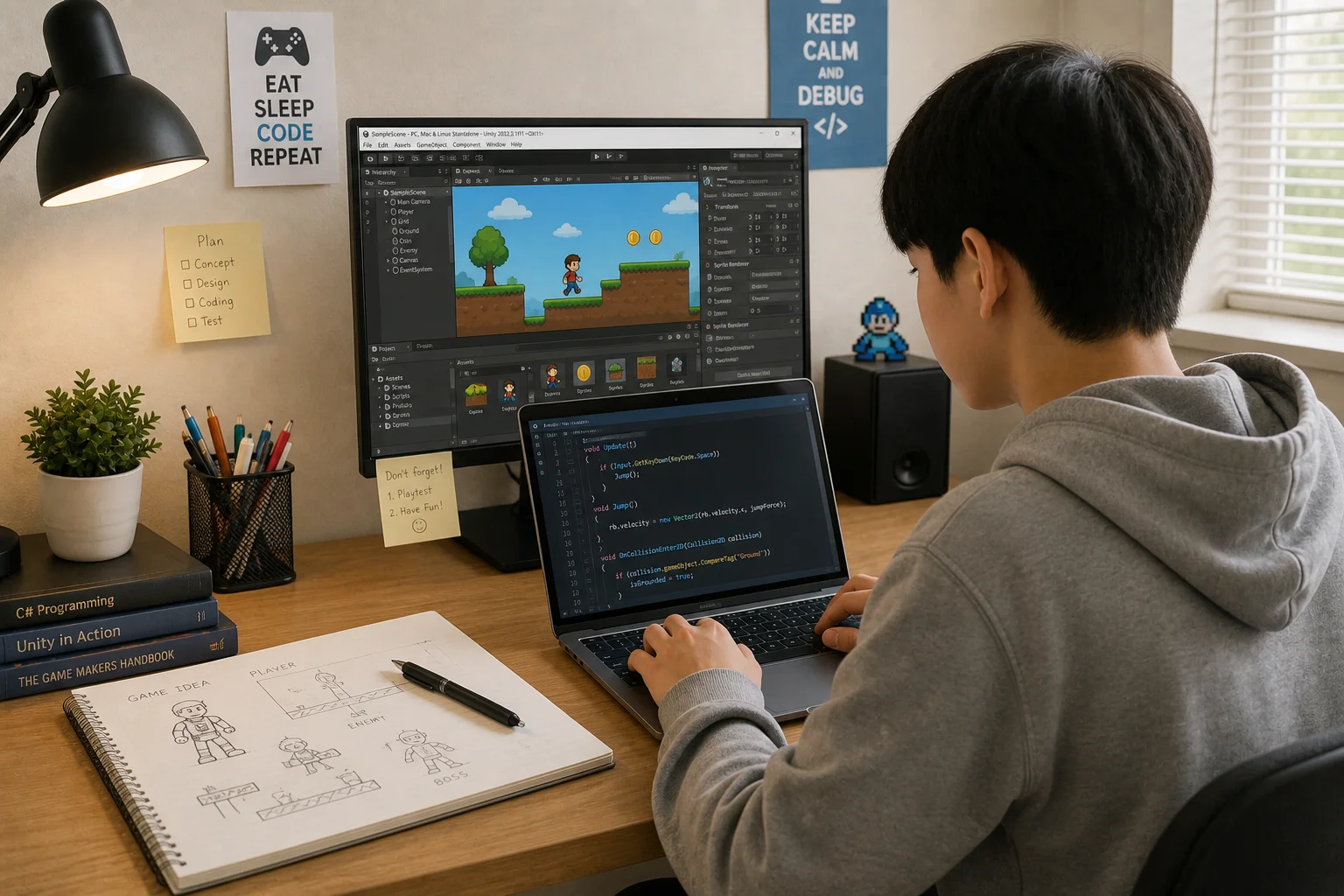
1. "You only play games" can be a starting line
Ever heard this during exam season?
"All you do is play games, huh?"
But if you play long enough, you start thinking things like:
"Why is this character so weak? I'd fix it like this."
"Why do I always get stuck on this map? The difficulty feels off."
"Who designed this skin?"
Those thoughts mean you're shifting from consuming games to thinking like someone who makes them. This post covers what game-related jobs exist and what you can start doing now. It doesn't promise that gaming leads to success. It sticks to realistic information.
2. Why this matters to teens
Games are a big industry. According to Korea's 2025 Game White Paper from the Korea Creative Content Agency, Korean game industry revenue in 2024 was about 23.85 trillion won, with roughly 87,600 workers. Some reports note growth has slowed, so the honest takeaway isn't "games always pay off." It's "it's competitive, so preparation matters."
Three reasons this matters for you:
Teens know very few jobs. If you only know "pro gamer" and "game developer," you're missing most of the options.
Game jobs don't need just one talent. Drawing, writing, coding, music, math and communication each have a place.
Starting early costs almost nothing. Many tools are free, so you can begin tonight.
3. The key idea: many people make one game
Games are made by teams, like movies. Here's the simple version.
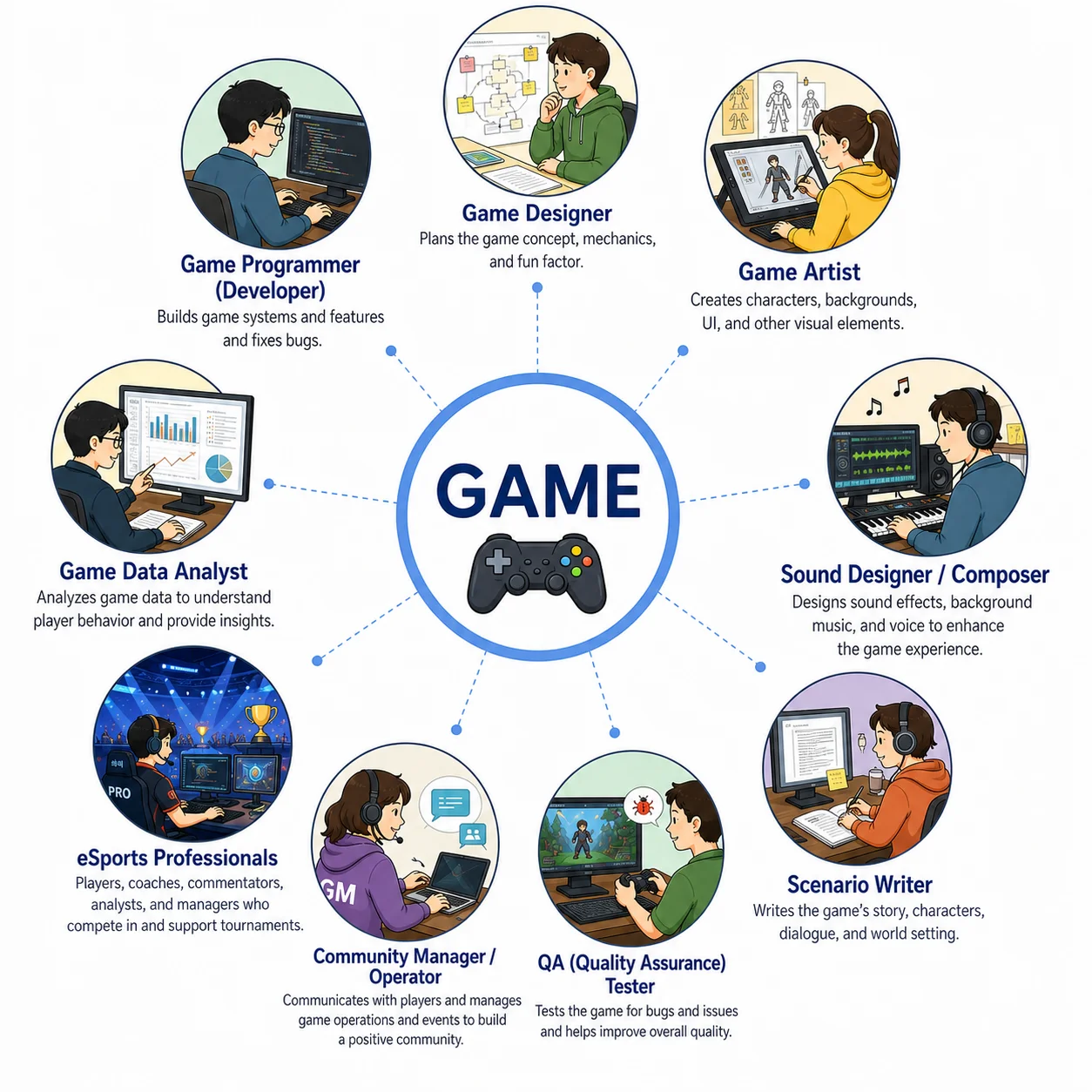
Job | What they do | Good fit if you… |
|---|---|---|
Game designer | Designs the rules that make a game fun: character stats, rewards, levels | often think "I'd change this part" while playing |
Game programmer | Turns designs into working code | like puzzles, logic and math |
Game artist | Draws characters, backgrounds, effects and menus | like drawing, 3D modeling or design |
Sound designer / composer | Creates music and sound effects | are sensitive to sound and music |
Narrative writer | Writes the world, story and dialogue | enjoy writing stories or webtoon scripts |
QA tester | Finds bugs and reports them clearly | are careful and explain problems well in writing |
Community / live-ops | Handles events, notices and player communication | are good at writing and reading people |
Esports roles | Coaches, analysts, casters, event staff, video producers, plus players | love breaking down a game and explaining it |
Game data analyst | Reads player data to see where people quit | are comfortable with math, stats and spreadsheets |
Quick glossary
Engine: a toolkit for building games. Unity, Unreal Engine and Godot are well-known ones, and you can start learning for free (check each official site for license terms).
Portfolio: a collection of your work. It shows "here's what I've made" when you apply to schools or jobs.
Bug: an error, like a character walking through a wall.
4. Connecting it to school life
Preparing for game careers isn't separate from schoolwork.
Math: probability (loot odds, damage), coordinates (movement) and functions (level growth) all show up in games.
Computer class: it's the direct foundation of game programming.
Art and music: character design, color and sound sense grow here.
Writing: dialogue, patch notes and bug reports all need clear writing.
English: many engine docs and developer communities are in English. Reading them with an AI translator as a helper builds the habit.
Group projects: games are team-made. Splitting roles and settling disagreements in group work is real practice.
5. Four real-life examples
Example 1. Minjun (8th grade): keeping a design notebook while playing.
Minjun wrote down annoying parts of a mobile game he played, like "The tutorial is too long, so what if it were three steps?" Ten of those notes make a good start to a design portfolio. His play time became study material.
Example 2. Seoyeon (10th grade): a mini-game for the school festival.
Seoyeon built a simple quiz game in Scratch for the festival. It wasn't polished, but 20 classmates actually played it. Finishing something small and showing it to others matters most.
Example 3. Jiho (11th grade): a QA habit from bug hunting.
When Jiho saw something weird in a game, he wrote down what he did, in what order, and what went wrong. That's close to what real QA testers do, because clear steps to reproduce a bug are valuable.
Example 4. Haeun (9th grade): exploring esports through match review.
Haeun didn't plan to be a pro player, but loved watching matches. She recorded her own gameplay and wrote out her decisions afterward. That kind of analysis can lead toward coaching, analysis, casting or content creation.
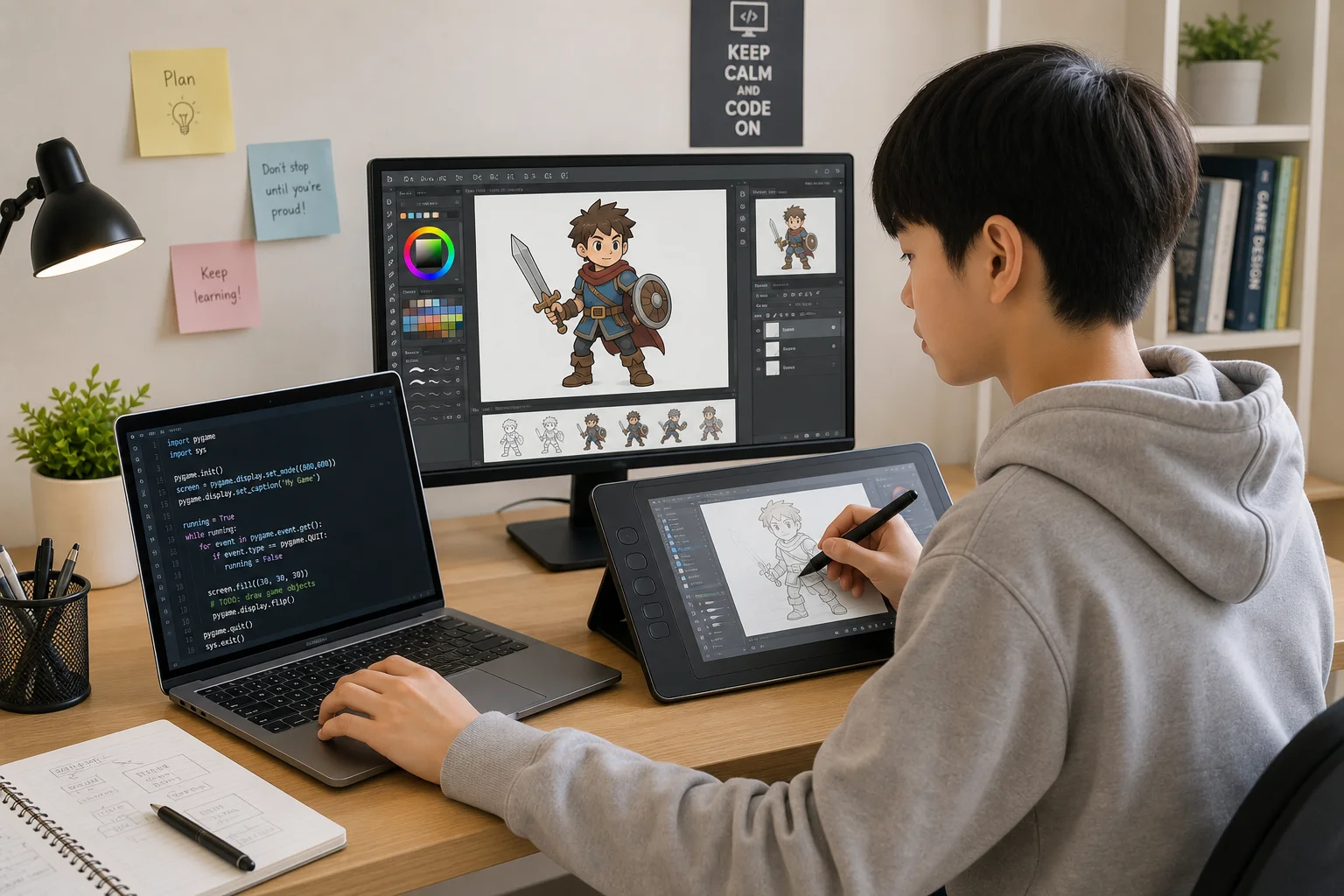
(The students above are fictional examples for illustration.)
6. A 4-week beginner plan
Week 1: analyze while you play
Pick one game. Write 3 things you like, 3 things you don't, and 1 thing you'd change.
This is your first time asking "why is this fun?"
Week 2: try a small tool
Scratch: block-based, fine for total beginners.
Roblox Studio, Godot, Unity: for more of a challenge. They're free to start, but check each site for terms and age limits.
Aim tiny, like a game where you roll a ball into a goal.
Week 3: let friends test it
Have 2–3 friends play. Watch where they get stuck and where they laugh. This is the heart of real game development.
Week 4: document it
Save screenshots, a short description and what you learned. That's your first portfolio piece.
Using AI well
Good uses: "Explain this error message simply," "Give me 5 rule ideas (I'll choose)," "Explain this English doc in easy words."
Bad uses: submitting AI-made code or art you don't understand. Check the AI rules for school assignments and contests, and say so when you used AI.
Terms differ by service for AI-generated images and music, so read them before using anything commercially.
7. Things to watch out for
Time management comes first. Playing all day and calling it "prep" isn't prep. Schedule playing and making separately, and protect sleep and schoolwork. If games are taking over your life, a school counselor or youth counseling service can help.
Protect your personal info. In game, dev and Discord communities, don't share your real name, school, address, phone number or photos of your face. Check portfolio screenshots for personal details too.
Beware of "easy money" gigs. Account boosting, item-trading side jobs and "high-paid game tester" offers can be scams or lead to account theft and data collection. If a stranger asks you to install a file or click a link, stop and tell a trusted adult.
Watch spending and gambling-like features. Loot-box pulls aren't "investing." Spending without a guardian's knowledge causes bigger problems later.
Respect copyright. Don't paste characters, music or images from your favorite games into your own. Use assets clearly free to use (like CC0) and credit sources.
Don't trust exaggerated success stories. The industry is competitive, and few players have long pro careers. Explore roles beyond playing and keep other paths open. Game skills also carry over to IT, design, video and data work.
8. Summary
Game careers include design, programming, art, sound, writing, QA, live operations, esports and data analysis.
The industry is large but growth has reportedly slowed, so steady skill-building matters.
Start today: play-analysis notes → tiny game → friend test → portfolio.
School subjects like math, computer class, English and writing all connect to games.
Protect your personal info, avoid scams, watch spending, respect copyright and manage time.
9. Good to know
Study paths: game or software programs, specialized or Meister high schools, computer science, design and content programs. Curricula vary, so check each school's official admissions info.
Where to read more: the Korea Creative Content Agency site (kocca.kr) offers the Game White Paper free.
Related careers: webtoons and animation, video editing, app development, educational content and AR/VR.
International view: the U.S. Bureau of Labor Statistics projects little or no change in overall employment for special effects artists and animators from 2025 to 2035, while still expecting around 4,200 openings each year. It's the same message: competitive, but with opportunities.
Try this today: write down one thing you'd change in your favorite game. That's your first design document.