How Will Studying English Change in the Age of AI?
Even when AI can translate and write for you, English still matters. This post shows teens how to use AI as a safe practice partner instead of an answer machine
How Will Studying English Change in the Age of AI?
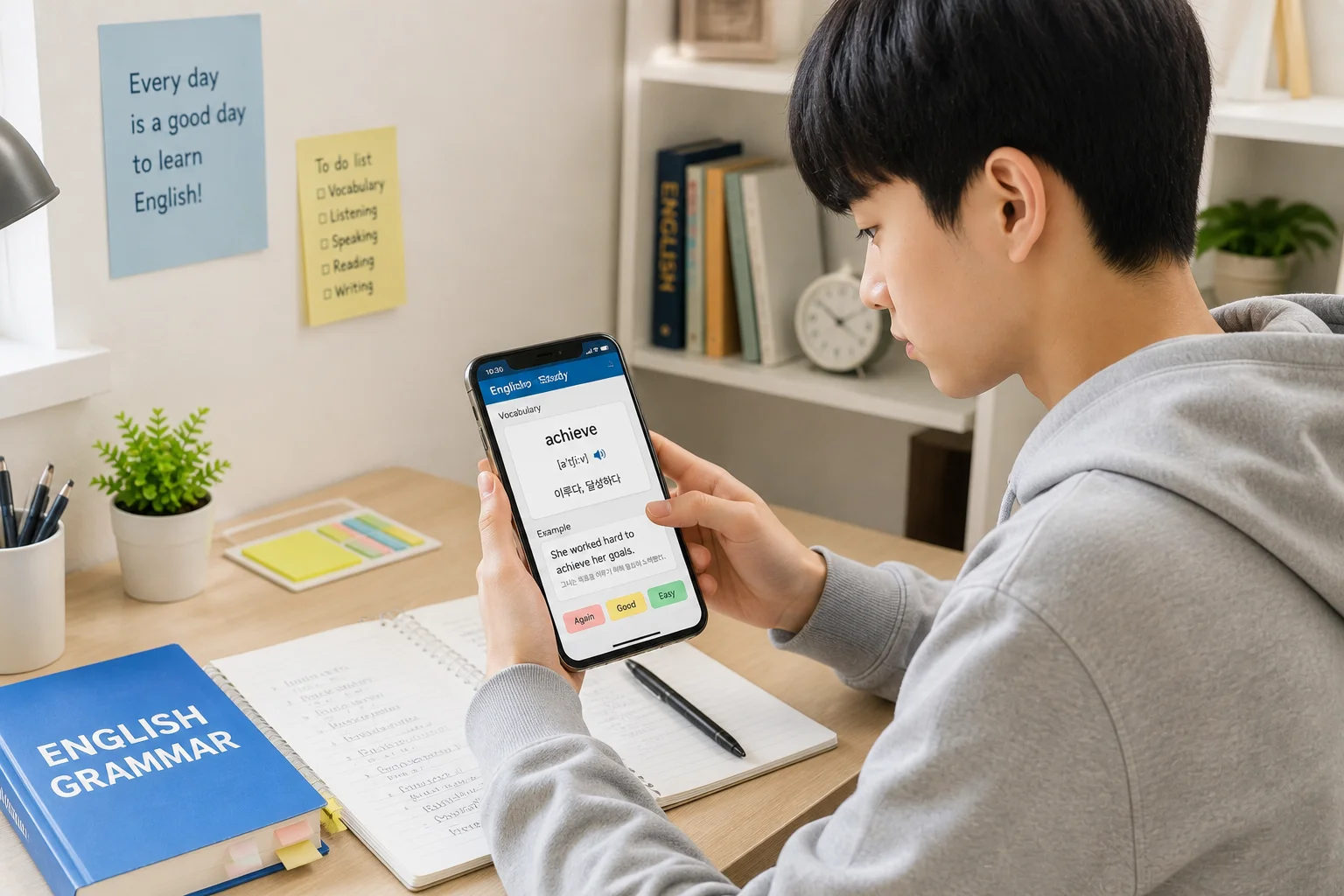
1. Sound familiar?
You have an English essay due. You paste your ideas into an AI tool and, ten seconds later, you have a full essay. The next day, your teacher asks, "Can you explain what this sentence means?" and your mind goes blank.
If AI is this good, why keep studying English at all? That's where this post starts. It will also show you how to use AI as a practice partner that builds your skills, not a tool that does your homework.
2. Why this matters for teens
Tests and school projects: Listening, speaking, and written answers still have to come from you. School AI rules also differ, so not knowing them can get you in trouble.
Using AI tools well: Many AI services were trained on a lot of English material, so asking in English can sometimes give you richer results.
Your future: For college, jobs, studying abroad, or creating global content, understanding English helps you notice what machine translation misses.
Fun and friends: Understanding gaming communities, videos, and fan spaces without subtitles makes them far more enjoyable.
3. The key idea: what AI does well vs. what you must do
AI is good at | You need to do |
|---|---|
Explaining words and sentences quickly | Understanding and remembering the meaning |
Spotting grammar mistakes | Figuring out why it was wrong and fixing it |
Being a chat partner 24/7 | Actually speaking out loud |
Making examples at your level | Using them in your own sentences |
Important: Generative AI (AI that creates text) can sound confident and still be wrong. Don't think "AI said it, so it's right." Think "Is that really true?" and check again. Having your own English skills makes checking much easier.
4. How to use it in school life
Before class: Ask AI about unfamiliar textbook words: "Explain at a middle-school level, with two examples."
After class: Explain today's grammar in your own words, then ask AI to check whether you got it right.
Performance assessments: Write your own draft first, then ask AI only what to improve. Always check your school's AI rules first. How AI digital textbooks are used can also differ by school and grade.
Exam time: Ask AI to "make five fill-in-the-blank questions from this unit" for a self-quiz.
5. Four real-life examples
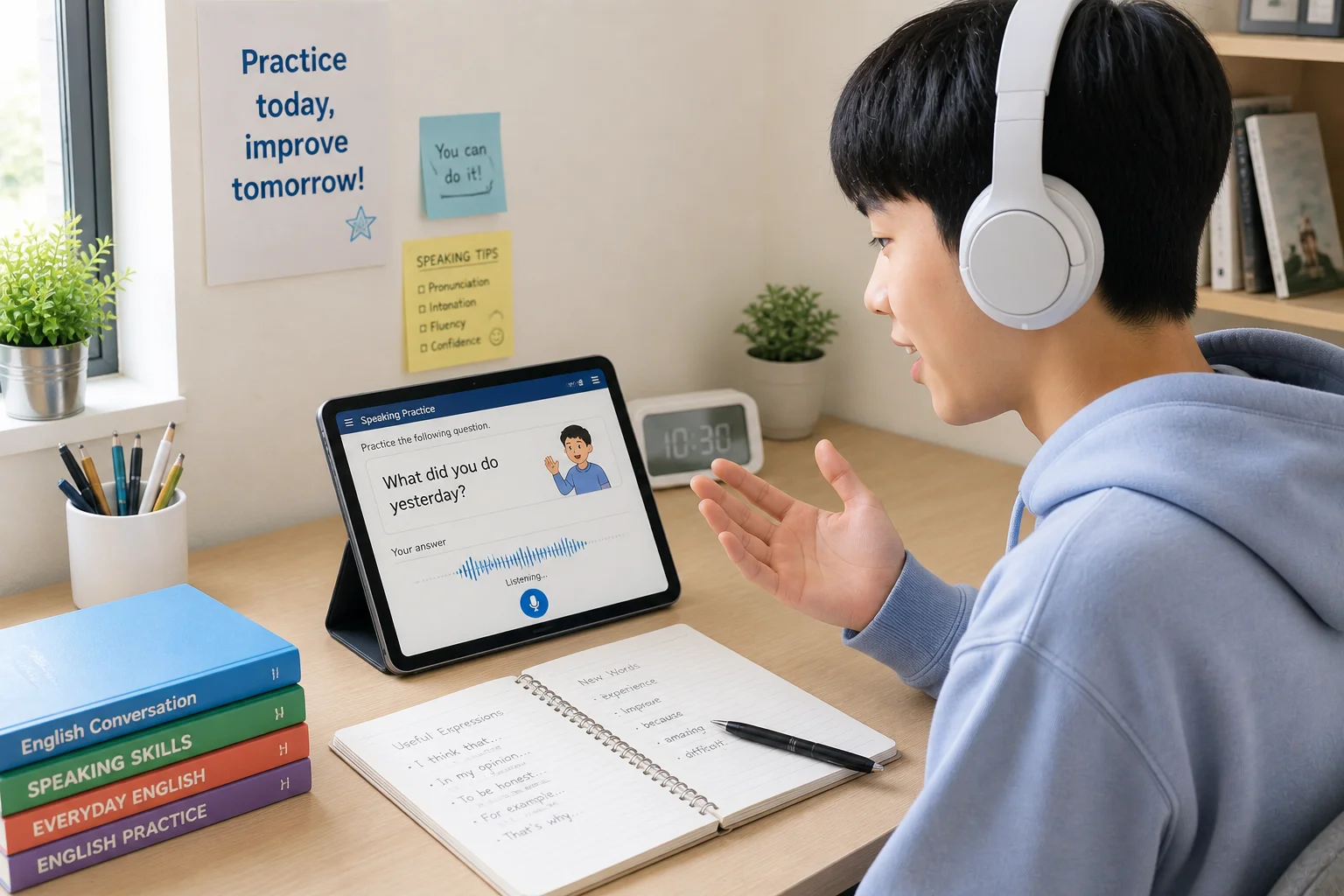
Example 1: Five-minute English chat
Situation: You're shy about speaking English in class.
Try this: "You're my English-speaking friend. Chat with me in simple English about my school day. If I make mistakes, tell me only once at the end."
Why it helps: No one is watching, so mistakes feel safe.
Example 2: Get feedback on your writing
Situation: You wrote an English diary but aren't sure it's correct.
Try this: "Mark only the grammar errors and briefly explain why in Korean. Don't give me the fixed sentence yet."
Why it helps: You fix it yourself, so you learn more.
Example 3: Build vocabulary from what you love
Situation: Textbook word lists are boring.
Try this: Ask for "10 useful English expressions" about your favorite game or artist.
Why it helps: You remember things longer when you care about the topic.
Example 4: Compare translator results
Situation: A translated sentence feels awkward.
Try this: Translate Korean to English, then back to Korean, and compare it with your original.
Why it helps: Spotting what changed teaches you about nuance.
6. A beginner's one-week starter plan
Mon: Pick a topic you like and ask AI for five easy English sentences.
Tue: Read them aloud and record yourself.
Wed: Chat with AI in English for 3 to 5 exchanges.
Thu: Write a three-line diary using new expressions, on your own.
Fri: Ask AI to point out grammar mistakes only.
Sat: Rewrite the corrected sentences yourself.
Sun: Note three new expressions in your own words.
Question formula: Your level (grade 7 / grade 10) + what you want + conditions (short, with examples, answer later). That gets you better replies.
7. Things to watch out for (please read!)

Don't enter personal information. No real name, school, grade and class, home address, phone number, face photos, or account details. How your input is stored and used varies by service, and you may not be able to tell.
Protect your friends too. Sharing someone else's information without permission can hurt them.
Check age limits. AI services have different age and parental-consent rules. Read the terms before signing up.
AI can be wrong. For exam content or anything important, double-check with your textbook, your teacher, or official sites.
Don't have AI do your homework. You could face consequences at school, and more importantly, your skills won't grow. If you used AI, it's best to say how.
AI can be too agreeable. For worries or big decisions, also talk with a trusted adult or friend.
8. Quick summary
English still matters in the AI era. You need your own skills to understand and check AI's answers.
AI works best as a practice partner, not an answer machine.
Try first, then let AI check your work.
Never enter personal information, and follow your school's rules.
Five minutes a day, done consistently, beats one long cram session.
9. Good to know
In the future, asking AI good questions will be a valuable skill. Practicing how to organize your thoughts in English helps.
Organizations like UNESCO and the OECD stress human judgment, privacy, and safe use when AI is used in education.
Listening to one English news clip, video, or podcast a day works well alongside AI practice.
AI services and school policies change often, so check the latest guidelines before you use them.