Why Do AI Data Centers Use Water? Liquid Cooling Made Simple
AI data centers use water-based cooling because liquid can carry heat away from densely packed GPUs more effectively than air. This does not mean spraying water onto electronics, and liquid cooling does not automatically mean high water consumption. The key is to separate heat collection inside servers from heat rejection outside the building.
💧 Water carries much more heat per unit of volume than air.
🧊 Direct-to-chip cooling sends coolant through sealed metal cold plates.
🔄 Water circulating through pipes is different from water consumed.
🌿 Energy and water savings depend on the facility design and local climate.
🔥 Why can fans struggle with AI servers?
GPUs release heat while performing the calculations behind AI training and inference. Packing more GPUs into servers and racks concentrates that heat in a small space.
Air cooling moves heat away using fans and supporting cooling equipment. As heat density rises, moving enough air becomes harder. Liquid cooling collects heat close to the chips, making it useful for dense installations. It is not required for every server.
💧 Does water actually touch the chip?
In a common direct-to-chip cooling design, a metal cold plate sits on top of the GPU. Coolant travels through channels inside the plate. Heat passes from the chip into the metal and then into the liquid; during normal operation, coolant stays separate from the electronics.
A pump circulates the warmed coolant, and a heat exchanger transfers its heat to another cooling circuit. Outdoor equipment ultimately releases the heat, and cooled liquid returns. Think of a car’s coolant carrying engine heat toward its radiator: the liquid transports heat rather than making it disappear.
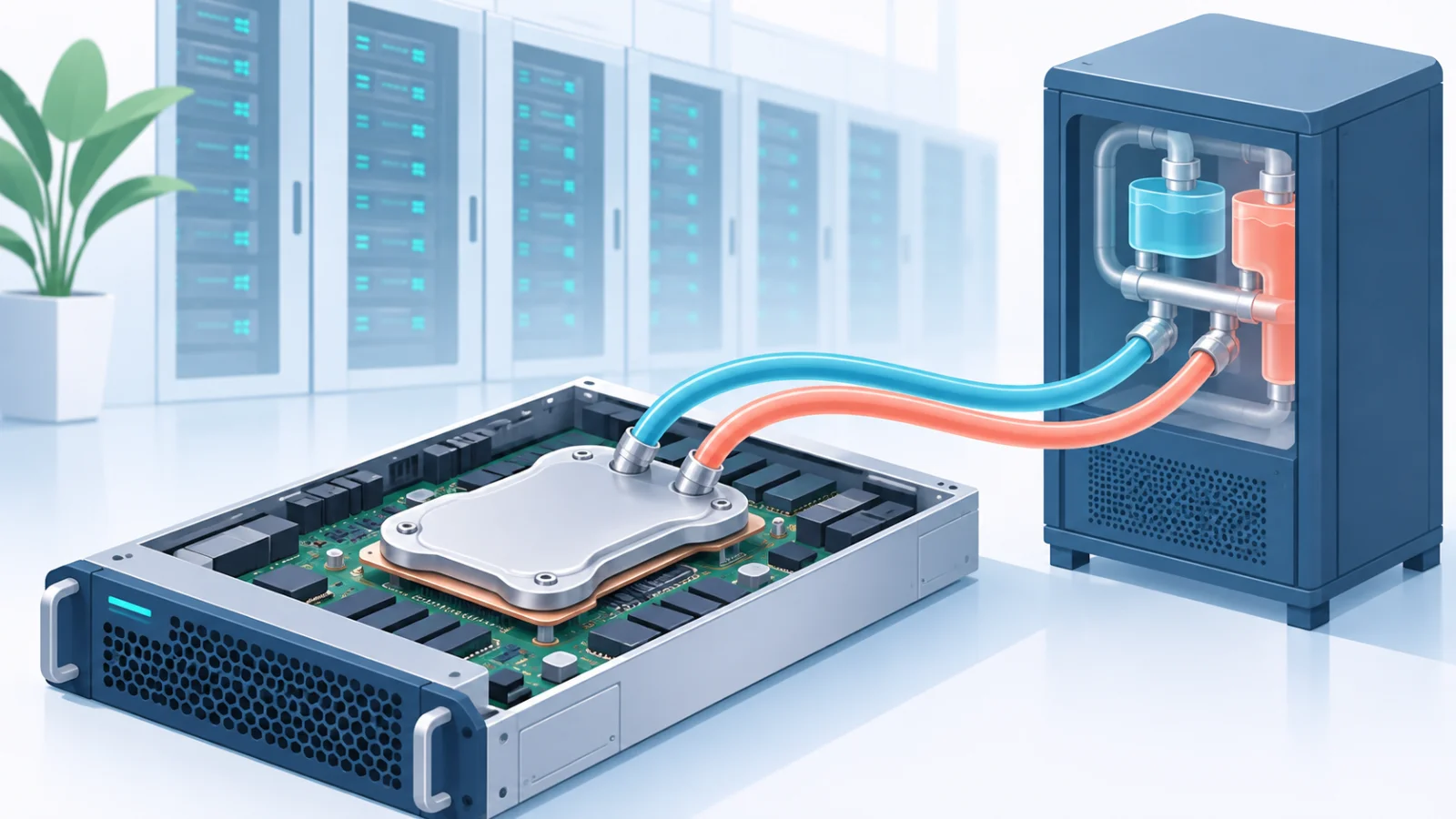
Conceptual illustration of sealed cold-plate cooling. Actual equipment layouts vary.
🛁 Is immersion cooling a water bath?
Immersion cooling places equipment in a specially selected electrically insulating liquid. It does not mean submerging servers in ordinary tap water. Water-based cold-plate systems also require controlled coolant chemistry, leak detection and maintenance.
🔄 If water recirculates, why worry about water use?
The server loop and the facility’s outdoor cooling system perform different jobs. Even if coolant recirculates inside the building, an outdoor cooling tower may evaporate water to release heat. That water must be replenished. Air-cooled servers can also rely on evaporative cooling equipment elsewhere in the facility.
Dry cooling equipment instead transfers heat to outdoor air without intentionally evaporating water. This can reduce direct cooling water consumption, but electricity demand and equipment size depend on the weather and operating conditions. A closed server loop alone does not establish that the whole facility consumes no cooling water.
🌿 Is liquid cooling always greener?
Efficient heat collection can reduce the work required from fans and refrigeration equipment, but pumps also use electricity. Water savings and energy savings need to be assessed together rather than assumed from the cooling label.
When you next read about an AI data center, check one detail first: how does it release the collected heat outdoors?